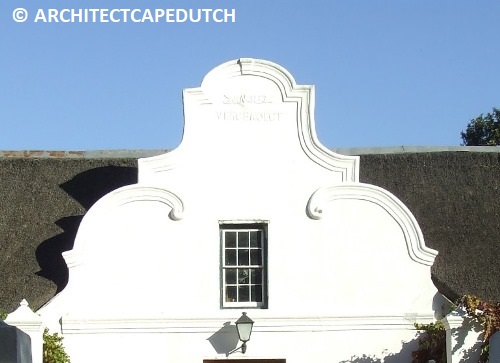
1. GROOT CONSTANTIA
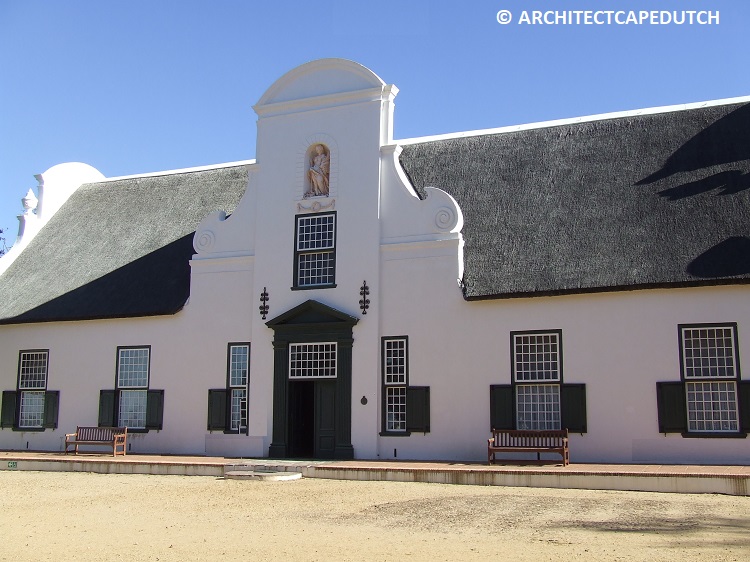
The most well known Cape Dutch building and most accessible to tourists because of its proximity to the city, this magnificent manor home does not disappoint. It was home to one of the earliest governers in the Cape colony, and underwent extensive refurbishment after a fire. The gravel in the front of the house instead of a garden, provides visual rest and emphasises the stately grandeur of the architecture.
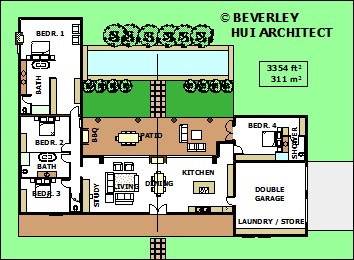
Click on more Cape Town architecture history for other historical buildings The farm was first established in 1685 by Simon van der Stel and the plan is in the late Dutch Renaissance style in an irregular u-shape. The house was almost completely ruined by fire in 1925. It was restored by architect Franklin Kendall. The home was made a national monument in 1984.
Visit ARCHITECTCAPETOWN for more on residential architects in the area. in this style.
2. ZEVENWACHT
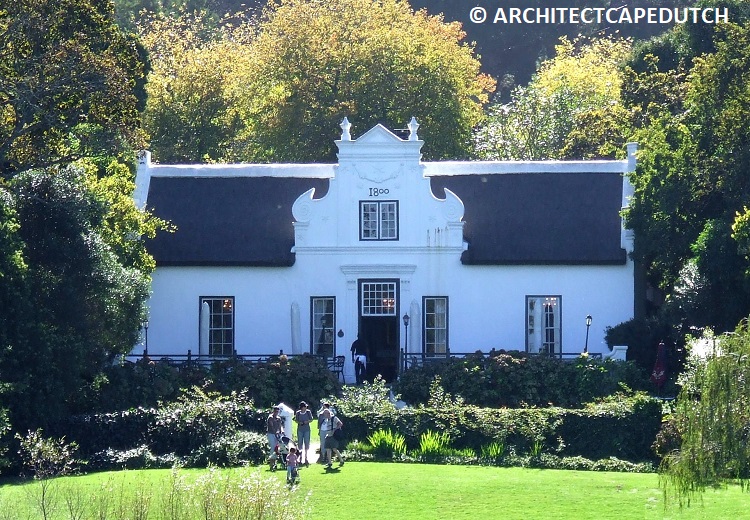
Located in the Northeastern suburbs of Kuilsriver this is a magnificent example of the style displaying many of the classic characterstics. The thatch roof has been preserved and the farm house altered into a restaurant... a function which makes it accessible to the public and keeps the building in beautiful condition. There is only one flanking window on either side instead of the main gable instead of the usual two or three, which gives the house its charming proportions.
See ARCHITECTCAPETOWN for more on flower Gardens in the Western Cape region.
3. RUSTENBERG
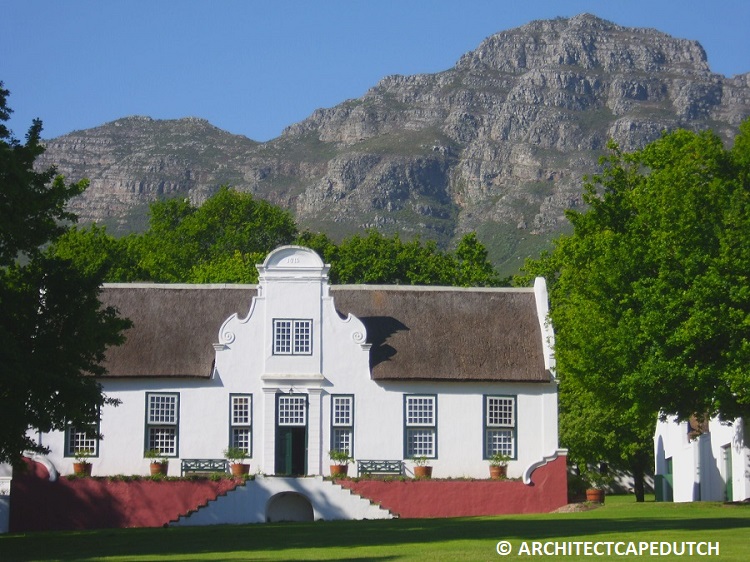
The farm house is one of the best examples of the Peninsula style despite not being located on the Peninsula! The distinguishing characteristic of this style is the central protruding section over the front door, which etends upwards into the gable. Two windows either side of the main entrance are perfectly balanced and the red plinth of klompie bricks provides contrast.
Visit CAPETOWNSPLENDOUR for more on residential architects in the area.
4. LANZERAC
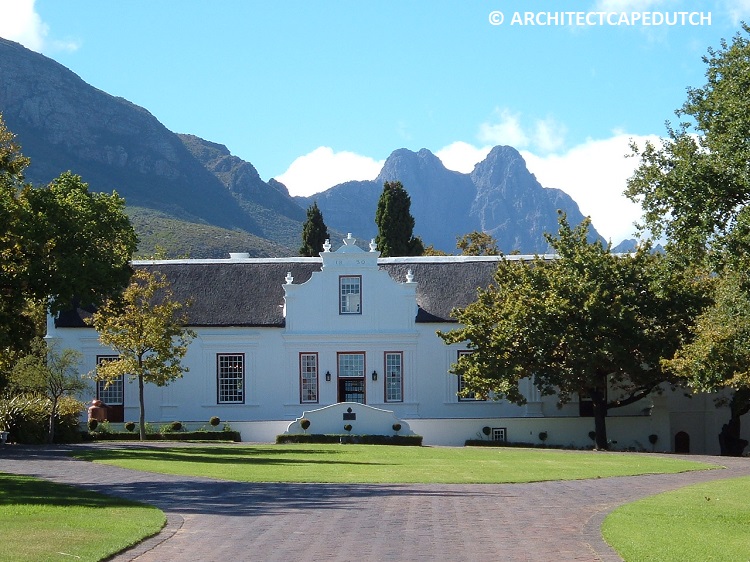
Converted into a hotel, this set of historical buildings enjoys a stunning location with the Peaks behind and the immaculate lawns in the front. Dress well, this is a classy destination.
Promoted: See ArchitectCapeTown for modern style architecture.
Natural Attractions Itinerary>
5. BOSCHENDAL MANOR HOUSE
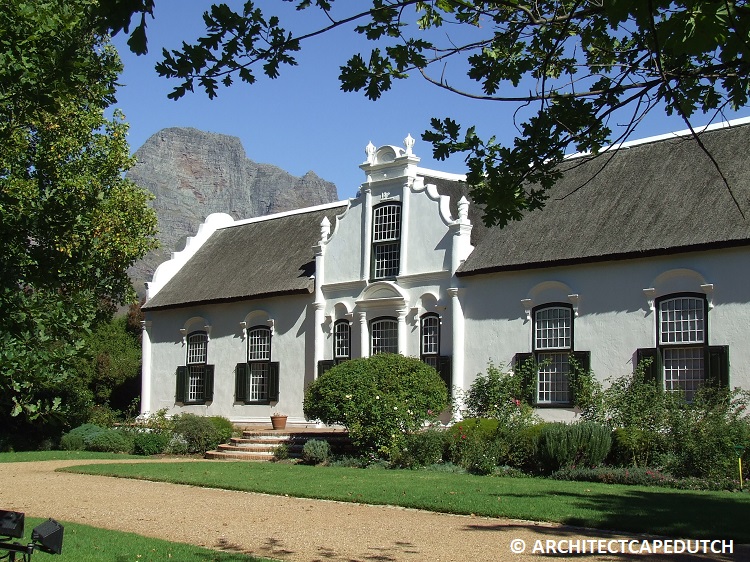
On the road between Stellenbosch and Franschhoek, you will pass this historic homestead that lies amid a fertile valley set against the Northern side of the Drakenstein Mountains. The home is a museum and open to the public. A few restaurants make it a comfortable house to visit.
Promoted: See CAPETOWNSPLENDOUR for more Cape Dutch garden architecture.
6. VERGELEGEN
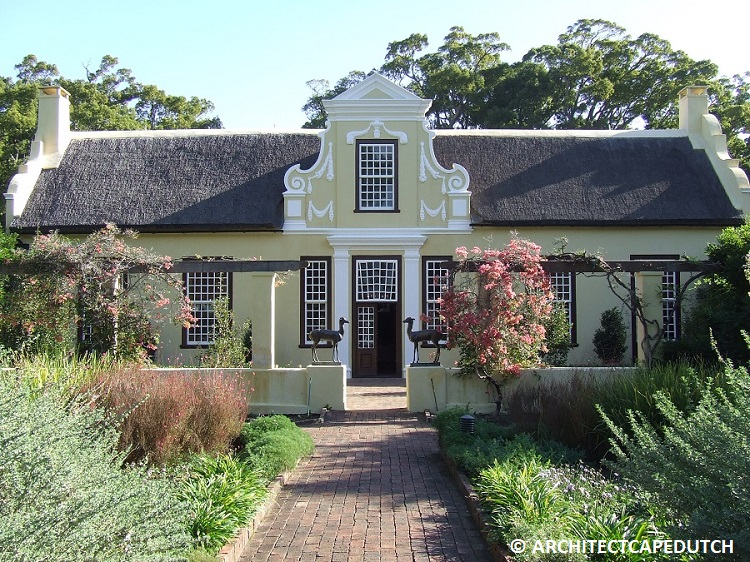
VERGELGEN MANOR HOUSE: One of the top tourism destinations in the area, this home has a long history with four owners from successive generations contributing to its beauty and success. The main homestead is now a museum, one of the rare places where one can view the historical Cape Dutch style of interior design. There are two restuarants located on the farm as well as a wine tasting venue designed by GLH architects.
View CAPETOWNSPLENDOUR for modern Cape Dutch style architecture.
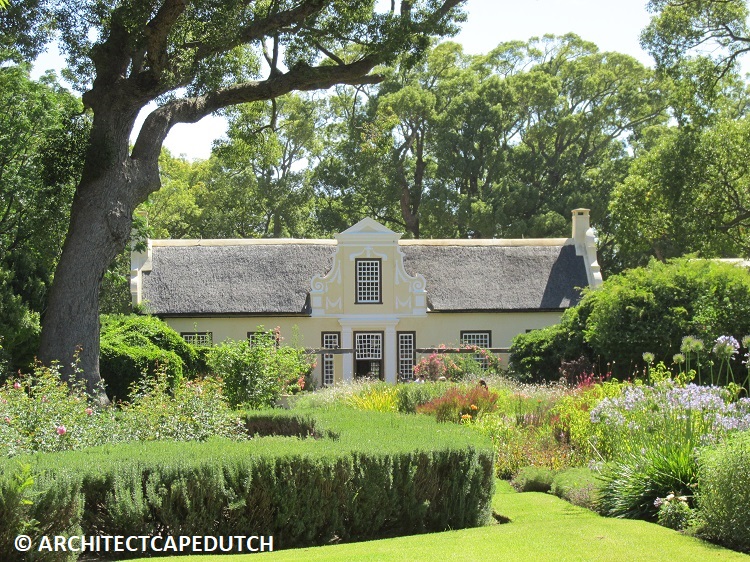
VERGELGEN MANOR HOUSE: A more distant view of the manor home shows how the landscaping and well established trees have been carefully placed to provide a harmonious whole. Herbaceous plants flank the central pathway providing a colourful border year round to the sprawling lawns.
Click on See ARCHITECTCAPETOWN for more flower gardens in the Cape.
SUNDAY SIGHTSEEING CHILLING ACTIVITIES
GARDEN AT VERGELEGEN
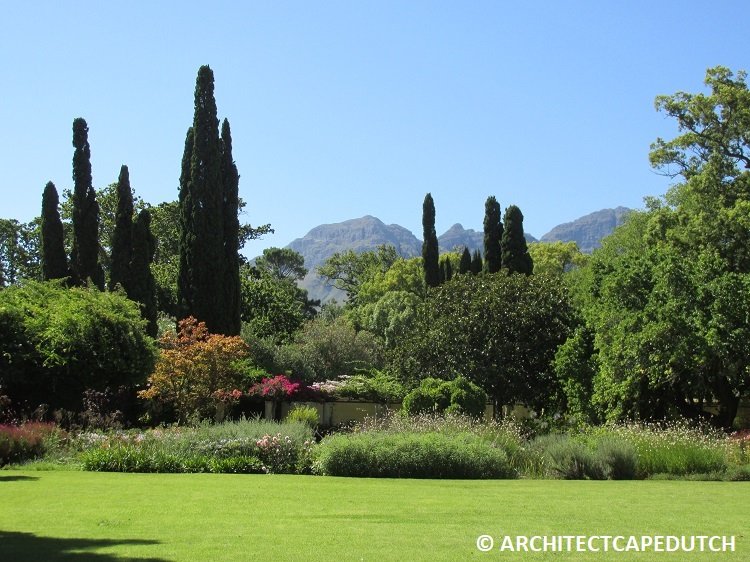
THE OCOTOGONAL GARDEN: Originally planted 300 years ago, the garden is surrounded by a wall in an octogonal shape. Protected and preservered by four generations, the depth of the history to this Cape Dutch garden is undeniable.
See CAPETOWNSPLENDOUR similar stunning historical gardens in the region.
7.LA DAUPHINE
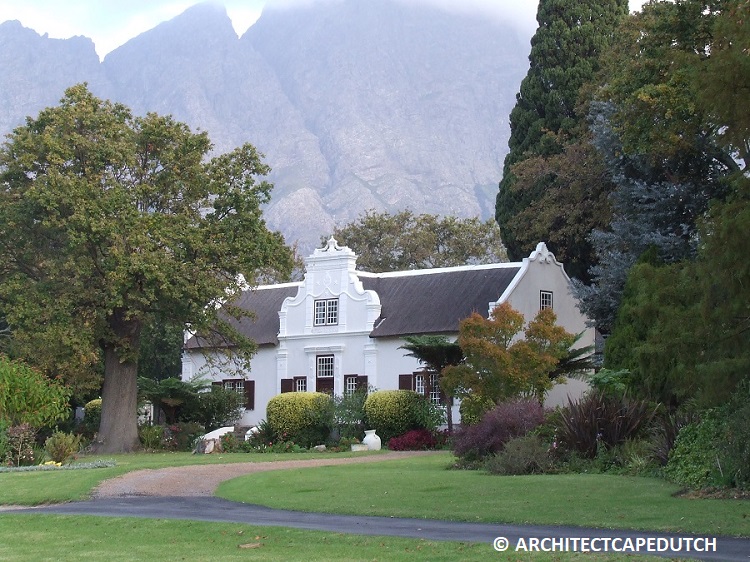
The beautiful French name is appropriate for this masterpiece in the Franschhoek valley. The gable is dated 1804 and is one of the earliest in the neoclassical style, which was marked by pilasters, pediments and urns. The garden and setting are unsurpassed making this one of the most picture perfect manor homes in the winelands. Nestled away in the suburbs and privately own, this is a gem you will battle to find!
8. VAN DER STEL MANOR HOUSE
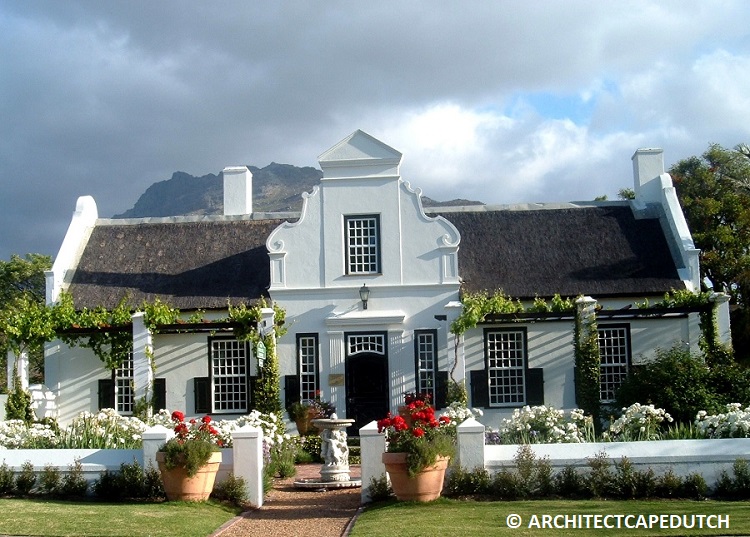
The gable was restored in 1910, although the original building is much older. The vertical sliding sash window is unusual although in the later neoclassical period it was more popular. The well kept flower pots, hedges and setting in the heart of Stellenbosch make this a guest house with a difference!
Visit ARCHITECTCAPETOWN for other h-shaped and u-shaped house plans.
9.WEBERSBURG
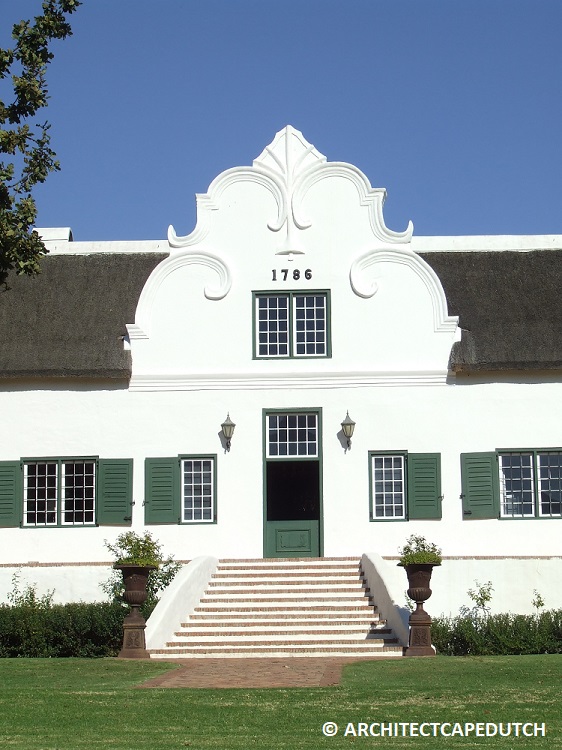
The bold baroque gable with it's large swirling cloud shape is clearly marked 1786. The dark green painted door and window frames are a popluar choice, after the natural dark wood colour. The well kept thatch roof, parklike surroundings and well developed cellars and outbuildings, make this a treasure of architectural history in South Africa. The home is a working guest house and the cellar home to some of the world's finest wines. See GLITZYMAGAZINE to view more information on this charming style.
10. NEETHLINGSHOF MANOR HOME
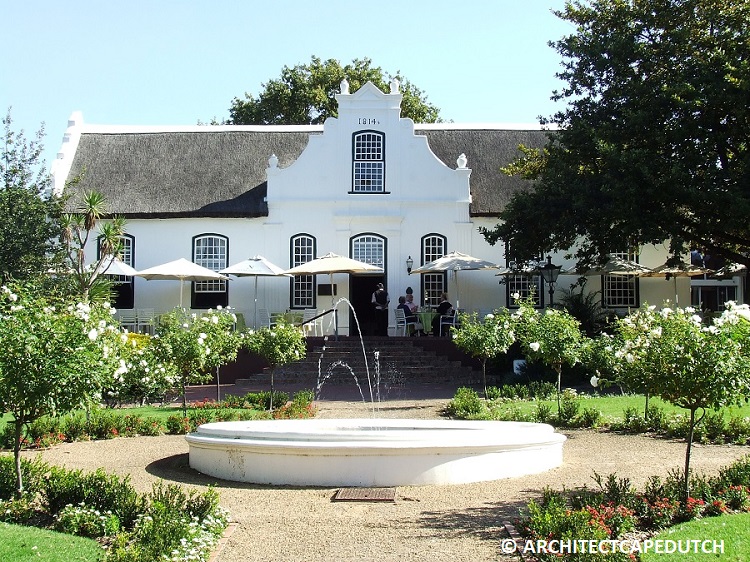
The home is built in the classic h-shaped layout, and is surrounded by soft garden blossoms. Umbrellas line the stoep with its cottage pane windows and sliding sashes. A fine restaurant and wedding venue make use of this historical landmark.
Visit GLITZYMAGAZINE to find out about other sightseeing attractions in this beautiful city.
NEETHLINGSHOF CELLAR
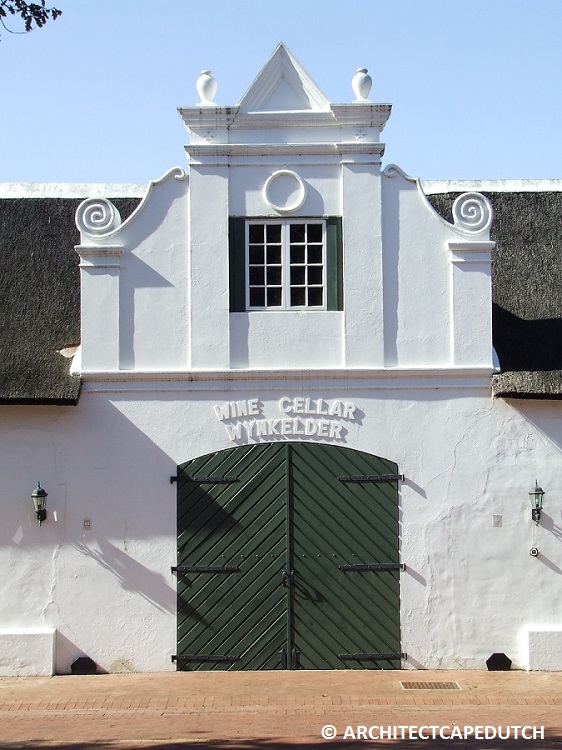
The gables of all the buildings are decidedly neoclassical and this gable at the cellar is a fine example of the style, with its four pilasters supporting a central pediment on the inner two. The outer pilasters support scrolls. A large shuttered barn type door emphasies the rural nature of the building's function.
CHARACTERSTICS OF THE STYLE:
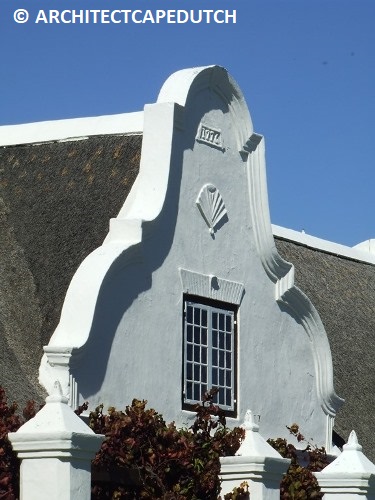
THE CENTRAL GABLE
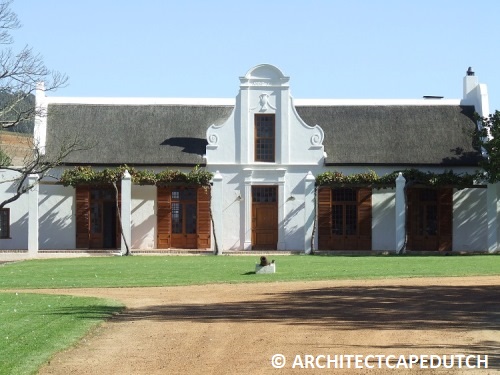
The gable is arguably the deciding feature of Cape Dutch architecture and the only building to be regarded as Cape Dutch
despite not having one, is the historic house at Uiterwyk. This gable is one of the earliest and the profile has a simple
concave-convex shape called "holbol." The shell motif and date, "1774" are the only decorations it possesses.
Go to
GLITZYMAGAZINE for modern farmhouses based on their historical counterparts.
THATCH ROOFS
The settlers needed to make use of local materials because there was a limit to how much building supplies they could carry on their ships. The abundance of grass and reads was available as well as local knowledge of how to use these to create a waterproof covering. Although a good insulator, the thatch roof is prone to fire damage. This example is from Babylonstoren just south of Paarl.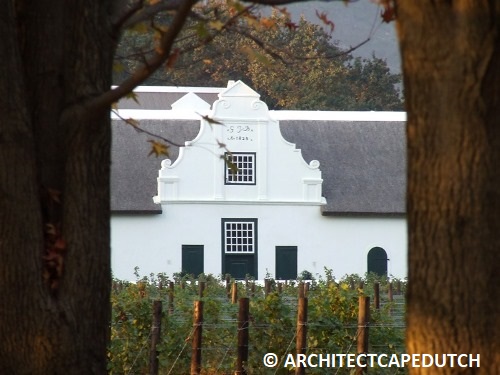
WHITE WALLS
The walls were almost always painted white, because of the availability of lime from sea shells. Some notable exceptions have been painted cream, but it seems these are changes that were made in later restorations.Click on GLITZYMAGAZINE to see designs by a Cape Town based architect.
SLIDING SASH WINDOWS
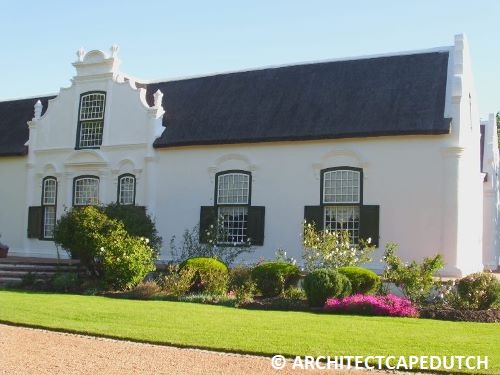
A system of weights and pulleys enabled the windows to slide one over the other creating the vertical
stylistic feature of the windows and making them easier to add operational shutters to.
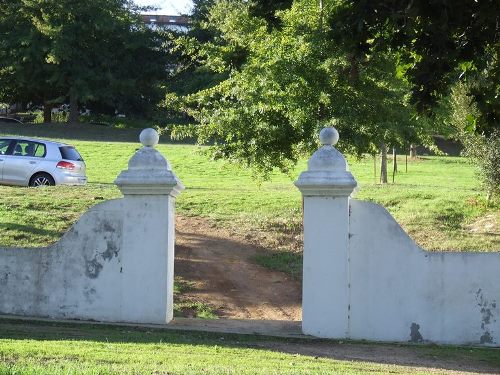
CURVED ENTRANCE GATES
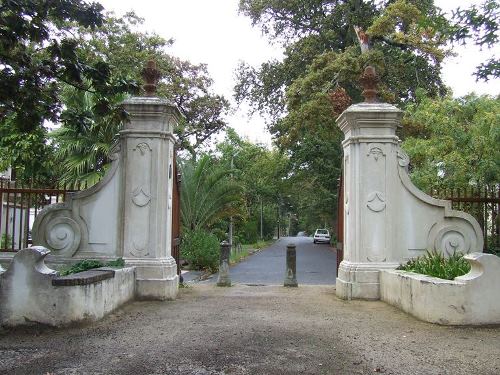
The entrance to the farm needed to be marked and the natural tendency was to create two matching walls. These became an opportunity for architectural expression. Those shown at the top are the historic gates of Boshof, and the lower ones are gate posts in a side wall at Elsenberg farm.Click on the link: GLITZYMAGAZINE to discover more about the architecture history of this region of South Africa.
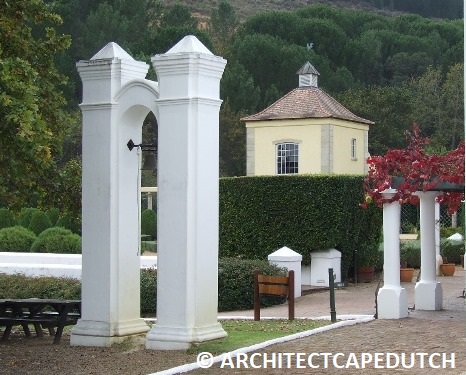
BELL TOWERS
Originall having the notorious function of calling slaves to labour, the bell on two pillars became part of the architectural vocabulary of the farm, and now appears as a wedding bell at the many wedding venues that the Cape Dutch houses have become.Promoted: See more upmarket architects Cape Town for modern Cape Dutch style architecture.
See contemporary architects in Cape Town for more on the Cape Town architecture scene.
See CAPE DUTCH SOUTH AFRICAN HISTORY for more on the Cape Town architecture scene.
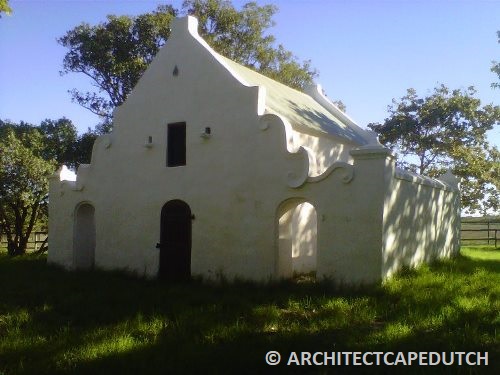
BELL TOWER AT MEERLUST
The bell tower at Meerlust farm south of Stellenbosch is an exceptionally tall examle and has two large urns demarcating the twin pillars. The bell is in an arch which was used almost without exception on all the wine farms.View GLITZYMAGAZINE for a list of architects making waves in Cape Town.
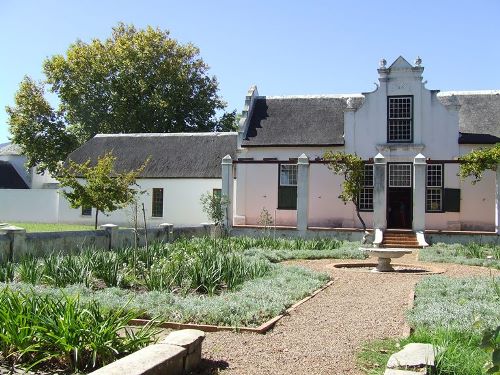
CAPE DUTCH GARDENS
The gravel pathways, low walls, and water features, are all landscapign features that were used to demarcate the various spaces of the garden. These were then filled with a mix of indigenous and exotic plants as well as the many functional herb gardens.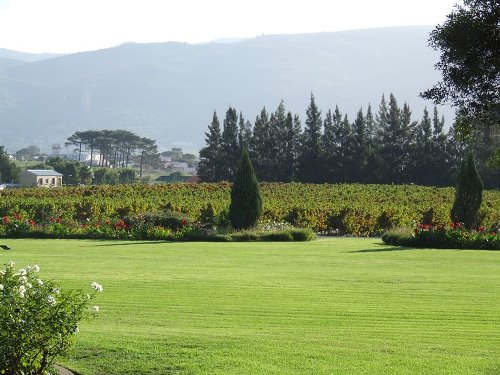
GARDEN AT NEDERBURG
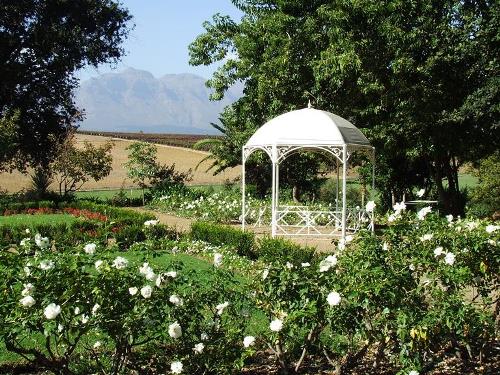
NEETHLINGSHOF GARDENS

H-SHAPED PLANS
Most of the houses were laid out in an h-shaped plan such as this compact design at Neethlingshof. One entered into the dining and lounge areas, while the bedrooms and kitchen were located at the back.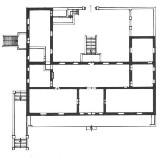
U-SHAPED PLANS
Some of the houses were designed in u-shaped layouts, such as this famous farmhouse at Groot Constantia. The plan has an unusally large width and spaces that interlead without any passages.Visit GLITZYMAGAZINE for more historical and modern architecture attractions in Cape Town.
DOVECOTS
An interesting feature of the style was the dovecot - a special outbuilding that housed the chickens. There are only three survinging examples and this one is to be found at Meerlust.View GLITZYMAGAZINE website for all the characteristics unique to the Cape Dutch style.

Itinerary of Natural Attractions in Franschhoek...
11.PETER FALKE WINES
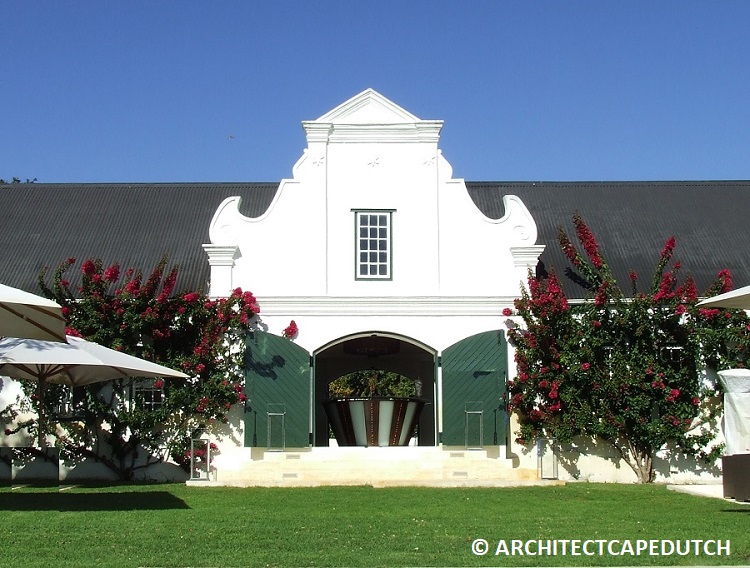
Located on the slopes of Helderberg mountain, the crisp white gable with horned flanks constrasts with the black metal roof which has replaced the thatch. Large green shutters to an arched barn door create a more modern look for what is now a thriving restaurant and tasting center.
More Cape Dutch in Stellenbosch>
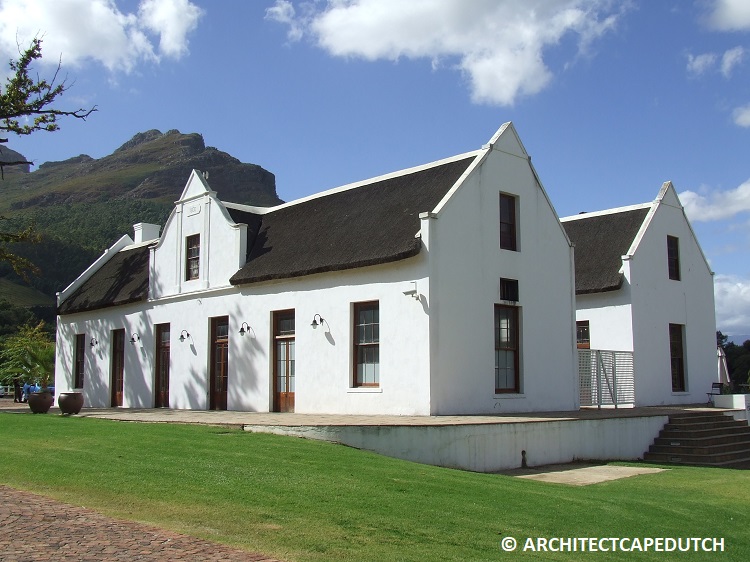
12. ZORGVLIET
The h-shaped layout is very clearly visible in this picture which shows how symmetry is produced on all sides of the building. The matching side gables are as much part of the composition as the central gable is on the perpendicular side. The home is set amid sprawling gardens restaurants and stunning views of the Drakenstein Mountains.
You might like GLITZYMAGAZINE page about high end architects working in Cape Town, South Africa.
More Cape Dutch Houses >
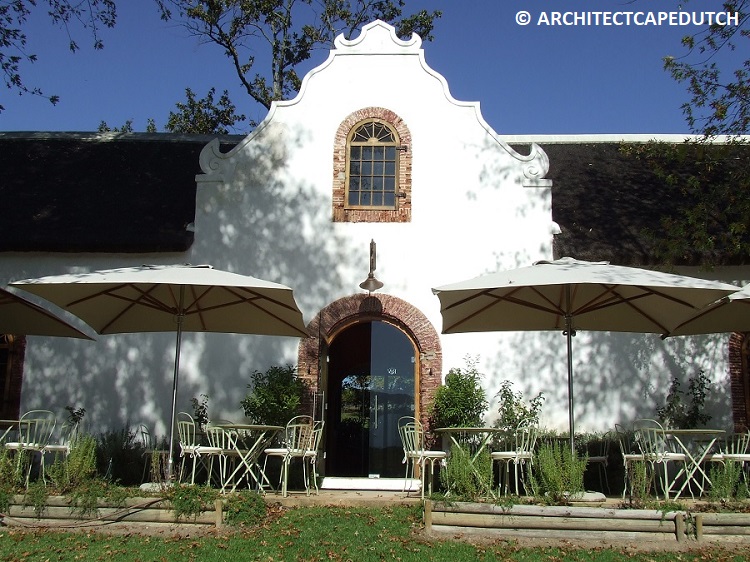
13. RUST EN VREDE
The home has been restored with a mdoern sensibility placing frameless glass alongside arches of red klompie bricks. The restaurant and wine tasting facilities are there to make your visit more enjoyable.
See GLITZYMAGAZINE for buildings in central cape town of interest to tourists.
Cape Dutch in Somerset West >